
How Cats Actually Show Stress — And What Your Pet Sitter Should Know
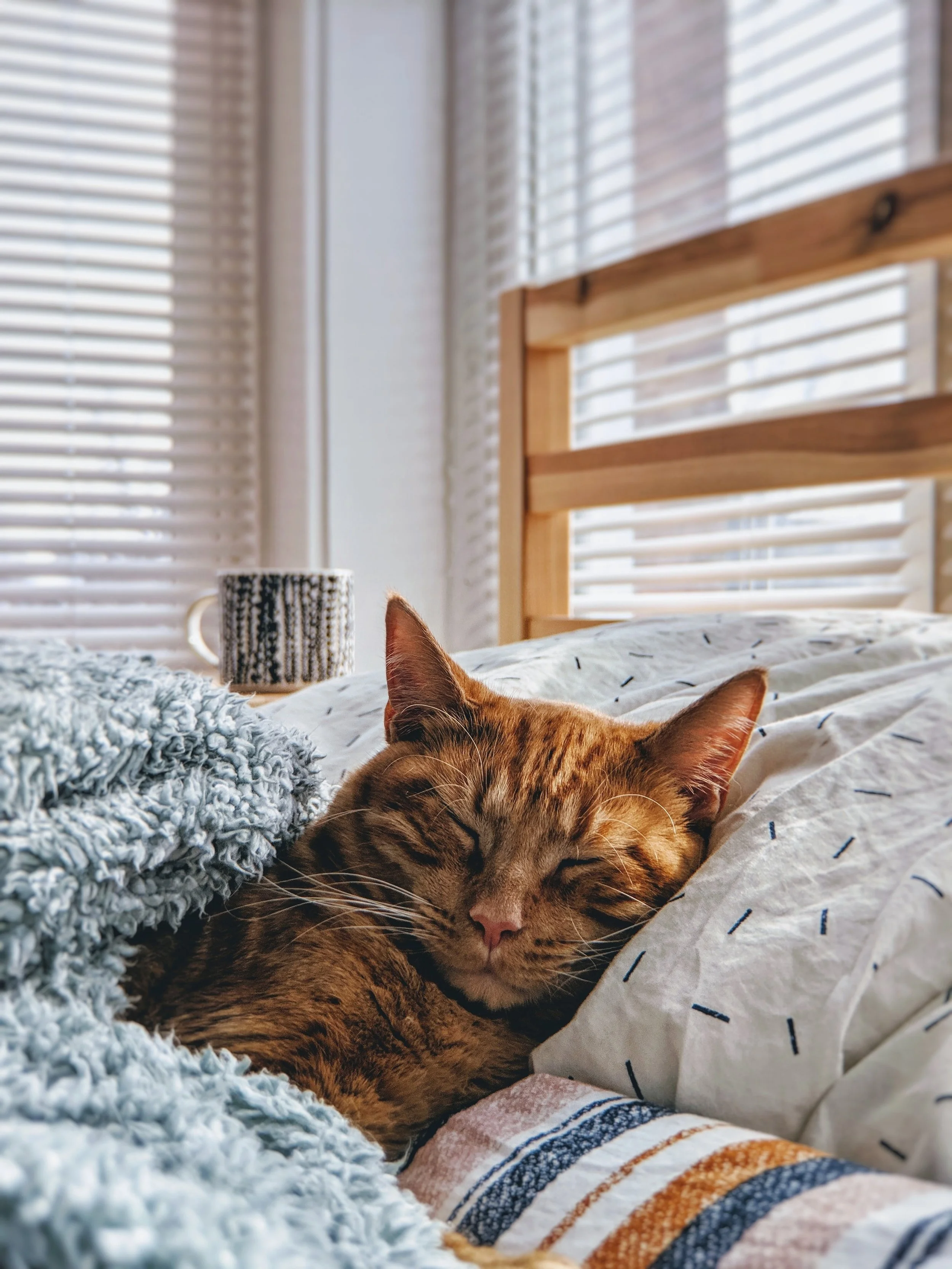
Cats are remarkably good at looking fine when they're not.
It's not a personality quirk. It's biology. Cats are both predator and prey animals, which means showing vulnerability has always been dangerous. A cat who appears weak gets targeted. So over thousands of years, cats evolved to mask discomfort, pain, and fear — often until the situation becomes severe.
This creates a real problem for pet owners and pet sitters alike: by the time a cat looks obviously distressed, something has usually been wrong for a while.
At Funky Bunch Pet Care, our team is Fear Free certified — which means we're specifically trained to recognize the early, subtle signals of fear, anxiety, and stress in cats. It's one of the most practical things that separates a trained professional from someone who's just "good with animals."
Here's what stress actually looks like in cats, and why it matters when you leave town.
Why cats hide stress
In the wild, a cat that limps gets eaten. A cat that appears healthy, alert, and in control survives. That instinct is still fully operational in your house cat, even though the threats have changed completely.
When a cat is stressed, sick, or in pain, the default response is to suppress external signs of it. They continue eating (sometimes), continue grooming (sometimes), and continue presenting a version of normalcy — right up until they can't anymore.
This is why cats are so often described as "low maintenance." In many ways they are. But "low maintenance" and "not suffering" are not the same thing.
Early signs of stress most people miss
These are the signals that show up before the obvious ones — the ones that require a trained eye and actual time spent with your cat to catch.
Changes in where your cat positions themselves. A cat who normally sleeps on the couch and suddenly spends all day under the bed is telling you something. Hiding more than usual — especially in spots your cat doesn't normally use — is one of the earliest stress signals.
Subtle shifts in grooming. Over-grooming is a well-known stress response, but it often starts small. A patch of fur that looks slightly thinner. A spot your cat licks repeatedly. These early signs are easy to dismiss as nothing — until there's a bald patch.
Eating changes that aren't dramatic. Not a full refusal to eat, but leaving more in the bowl than usual. Eating slower. Less interest in food that normally gets inhaled. A stressed cat's appetite changes before it disappears.
Tail and body language during interaction. A tail carried low or tucked, ears rotated backward or flattened, a body that tenses when touched — these are stress signals happening in real time. A cat who tolerates being touched but doesn't lean in is communicating differently than a relaxed cat.
Litter box behavior that's almost normal. Going outside the box occasionally. Spending longer in the box. Going less frequently. These subtle shifts in litter box habits are some of the most reliable early stress indicators cats give us — and they're easy to overlook during a quick drop-in visit.
Signs of significant stress
These are the signals most people do notice — but by the time they appear, stress has usually been building for a while.
- Hiding for extended periods — hours or days — and not coming out for food
- Full refusal to eat for more than 24 hours
- Vocalizing excessively, especially at night
- Aggression toward people or pets they normally tolerate
- Using the bathroom outside the litter box repeatedly
- Visible over-grooming — bald patches, raw skin
If a sitter sees these during a visit and isn't trained to recognize them as stress responses, they may be logged as "cat seems shy today" rather than what they actually are: a cat that needs attention.
What this has to do with your pet sitter
When you leave town, your cat loses the primary environmental anchor that keeps her regulated — you, your routine, and the predictability of a normal day. That's a real stress load, even for cats who seem unbothered.
A pet sitter who shows up, fills the bowl, scoops the box, and leaves in eight minutes is not going to catch early stress signals. There isn't enough time and there isn't enough observation happening.
A Fear Free certified sitter who spends real time during every visit — watching how your cat moves, eats, interacts, and positions herself — is actually gathering information. They know what "normal for this cat" looks like because they paid attention during the meet and greet and the first few visits. They notice when something is slightly off.
That distinction matters most with cats who are already anxious, cats who are senior, and cats with health conditions. But it matters for every cat, because the earlier a stress response is caught, the easier it is to address.
What Fear Free certification actually means
Fear Free is a professional training and certification program for veterinary and pet care professionals. It was developed by veterinarians and animal behaviorists specifically to address the fact that fear, anxiety, and stress in animals are often under-recognized and under-addressed.
Fear Free certified pet sitters have been trained to:
- Recognize the behavioral signs of fear, anxiety, and stress across species
- Modify their approach to reduce triggers — how they enter a space, how they move, how they initiate interaction
- Distinguish between a cat that's shy but okay and a cat that's genuinely distressed
- Document behavioral observations that help owners and veterinarians track changes over time
It changes the texture of every visit. Not dramatically — a Fear Free sitter still feeds your cat, scoops the box, and sends you an update. But they do it with a framework for actually reading what your cat is communicating.
Practical things you can tell your sitter
Whether you're working with Funky Bunch Pet Care or another professional sitter, the more context you provide about your individual cat's normal behavior, the better.
Useful things to share:
- Where your cat typically sleeps and hangs out during the day
- How long it normally takes her to warm up to new people
- What her normal eating and litter box patterns look like
- Any stress triggers you've noticed — certain sounds, handling she doesn't like, spots she retreats to when overwhelmed
- How she typically behaves when you've been gone before
This information is part of what we gather during our meet and greet. It's not just pleasantries — it's the baseline we use to recognize when something has shifted.
Frequently asked questions
How do I know if my cat is stressed while I'm away?
You mostly can't tell in real time — which is why a trained sitter who spends real time during each visit and sends you a detailed report is so valuable. Look for behavioral changes when you return: hiding, litter box changes, appetite changes, or unusual aggression.
What causes cats to become stressed when owners travel?
The primary triggers are disruption of routine, loss of the owner's presence (cats are more bonded to their people than they're given credit for), and any change to their environment. New smells, new people, and unpredictable visit schedules all contribute.
Can a cat get sick from stress?
Yes. Sustained stress in cats can suppress immune function and trigger or worsen physical conditions — most commonly urinary issues, digestive problems, and upper respiratory symptoms. Stress-related illness in cats is well-documented in veterinary literature.
What is Fear Free certification for pet sitters?
Fear Free is a professional training program developed by veterinarians and animal behaviorists. It teaches pet care professionals to recognize and reduce fear, anxiety, and stress in animals. Fear Free certified pet sitters have been specifically trained in animal body language, stress signals, and how to approach animals in ways that minimize anxiety.
How do I find a Fear Free certified cat sitter in Springfield, MO?
Funky Bunch Pet Care is Fear Free certified and serves Springfield and surrounding areas. You can also search the Fear Free directory at fearfreepets.com for certified professionals near you.
Funky Bunch Pet Care is a Fear Free certified, insured, team-based pet care company serving Springfield, MO. Our W-2 employees are trained to recognize stress signals in cats and document behavioral observations after every visit. Schedule a meet and greet.